
Transcript
(Intro music)
Ally: Welcome to the Digital Creator Podcast, the show where we spotlight students working on cool digital projects. I’m Ally, a consultant at the Digital Knowledge Center where we empower students to be digital creators. Today’s guest produced a podcast that reframes history from an untold perspective.
Connor: My name is Connor O’Brien. My pronouns are he/him. So, I have two majors, pre-law and history. And then, oh, graduation, yeah, it’s supposed to be spring 2026. That’s what I’m supposed to graduate as.
Ally: Awesome, cool. So, can you go ahead and tell us a little bit about the project you’re doing for your fellowship with the DKC?
Connor: Yeah, so I really like podcasts and audiobooks and just listening to stuff in general, like I love. I learn pretty well that way. And so, I’m a big fan of history, obviously. It’s one of my majors. And I really like history podcasts. But the problem is, a lot of them, they either post very infrequently or a lot of good ones are like over and the person who made them hasn’t made anything in a while or So I eventually got so fed up with it, I was like, I’m just going to make my own history podcast. So, I probably started that somewhere around the end of sophomore year. And I’ve just been, it’s been like a hobby of mine. And then this year I kind of decided, because I hadn’t worked on it in a bit, I was like, I’ll do a fellowship with the DKC. And that’ll kind of force me to work on it. And then also I wanted a website to go with my podcast. So, because I write these scripts and they’re all annotated and they have, sometimes it’s helpful to have maps and stuff. I really wanted it to be accessible for people. And so if you, for some reason, need it or you’re just curious, I’ve got all my scripts on the website, I’ve got maps on the website. So that’s a big part of why I did it with the DKC, because they’re… really big about that kind of stuff. And they’re good at building websites.
Ally: Yeah. I saw on one of your recent posts you were talking about, you’re recommending some historical podcasts. I saw one of them only posts like once a year. So, I definitely am seeing what you’re talking about where like, it’s not as frequent as kind of what you’re trying to do.
Connor: And I like, I get it. takes a lot, these kinds of things like, cause you know, it’s not just like a, what I really didn’t want to fall into is the trap of being just like another white guy with a podcast.
Ally: Right.
Connor: Because nobody wants, like nobody cares, nobody cares. And so, but the thing is, it does, it takes a lot of research, it takes a lot of time and effort, and you have to make sure what you’re saying is actually true. So, I understand why these kinds of things take a long time. But yeah, the goal is to eventually have like a-an established schedule, but I mean, with school and everything, I kind of have to focus on that.
Ally: Yeah, for sure. How did you end up connecting with the DKC? Like, what made you go from, I want to do this more consistently to a fellowship?
Connor: So part of that, like I said, was like, I wanted it to be accessible, because something that I find really frustrating, like listening, not, I mean, frustrating, it’s not that serious, but listening to these other podcasts, like sometimes I’ll be like, where did you get that? Like, where’d you get that information? And so I wanted my sources to be out in the open and easily accessible for people. And so I actually used to work at the DKC. I came in my freshman year for my FSEM. I was like, I wanted to show everyone up with my website. And so I was like, hey, so I did this with my website. Like, can you help me kind of upgrade it? And they liked that I had kind of been proactive with my website. And so, they hired me here. So that’s kind of how I knew about it. And yeah, I’m a big fan of the DKC.
Ally: Great. Can you tell us a little bit more about like your creative process and sort of like how you come up with what you want to talk about and how you’re going to go about that?
Connor: Yeah, so I initially, well, the way that I usually come up with stuff is like, I’ll just go for things that I’m interested in and I try to explain to other people why I find it so interesting. So, this first series I’m doing, do you remember that meme that was going around a little while ago that was like, ask a man how often he thinks about the Roman Empire?
Ally: Yes, I do remember that.
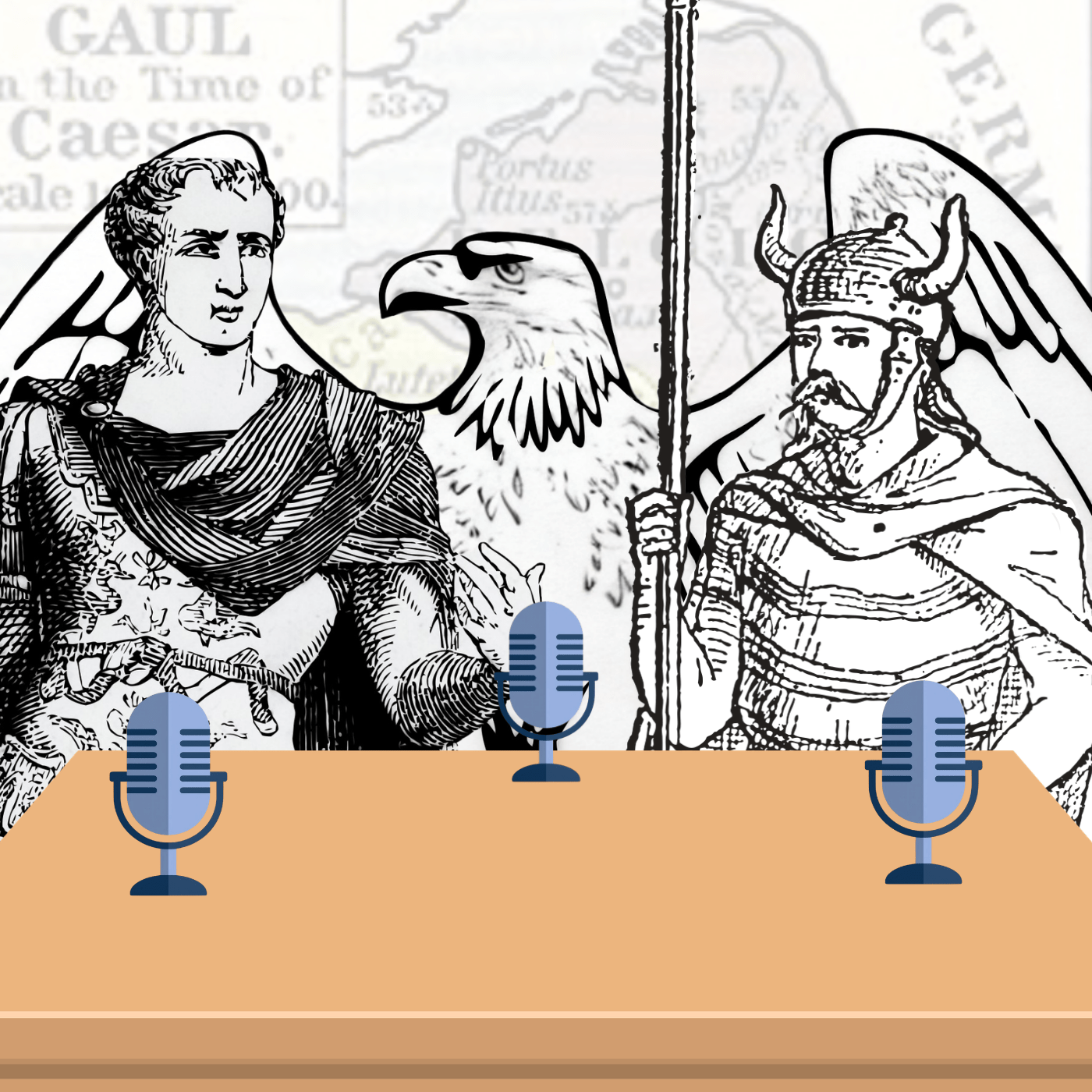
Connor: I really like, don’t want to be like that, but I do like, it is just, it’s a period in history that I’m very interested in. And I’m really interested in how similar they are. Because like a lot of people, when they talk about history, they’ll kind of they talk about it like it’s like a different species of people or totally like, that’s just how they did things back then. And I’m, and this is just based on the primary sources. Like you can read things from that time period that are, so totally outside of that, like the stereotype. And so that the podcast is called History Rewritten, because I kind of want to shift people’s perspective on history. And so I picked this initial topic, it’s about Julius Caesar and his invasion of what is today France. So, at the time it was called Gaul, and it was supposedly he killed a million people and he enslaved another million people out of the 3 million people that lived there. Obviously, that’s a totally fake, like they made-up that number, but he obviously did enormous damage to this other country. And so, in especially recent years, scholars have been kind of wondering, maybe should we consider this a genocide? And genocide is something that you kind of hear about all the time. nowadays, and it’s a very hot, contentious political issue because nobody wants to be the country that committed genocide. But what I’ve found in my own research is every single country at some point has committed a genocide pretty much, except for the, you know, there are obviously a few exceptions, but I kind of wanted to project that back onto the past. Like that is something that I think is super important because I think it’s how we prevent stuff like that from happening again. So that’s kind of how I decided that would be my first project.
Ally: Yeah, I liked in your first post when you said like, history doesn’t repeat itself, it doesn’t even rhyme, right? But like there are certain like consequences that like echo through into later historical periods. And I think that’s very clear that like that’s what you’re trying to bring forward here. Have you always been interested in this kind of project or did something spark it throughout like school or life or?
Connor: So, I think it’s hard to say. Like I’ve always been interested in history. Like it was a top, it was something that I was good at school. I didn’t have to study for the tests like I did. Like I’ve always been terrible at math and science is fun, but it’s really hard. So, in science and math, at some point, if you want to do a career in science, you have to get good at math. So, I was like, when I came to college, I was like, I’m definitely not doing anything like that. I’ll do something in the humanities. So, I started as an English major, English creative writing. And the interest in writing is obviously still there. But I added a major in history, and then I switched to pre-law because I I realized that I can still write creatively while also making a very real, tangible impact on the world and actually doing things to make it a better place. And that’s not saying that as an English or a creative writing major, you couldn’t do that, but for me and for the things that I was interested in, I decided that it would be better to utilize my skills that way. So, And history, as I’ve learned more about it, I have only become more interested in it. So yeah, it’s just, it’s like the best book you’ll ever read. You know, anything can happen in history, which, and at some point in the line, it leads to you. So, there is like a very real impact on your own life and the way that you do things. So that’s kind of Yeah.
Ally: And I think a lot of the time, too, when people talk about creative writing, they just assume it only means fiction, but there really is, such a genre that is creative nonfiction. And I think a lot of times, like people forget that history in a certain way, like is a story that has been written and projected in one way. And, you know, historians are now sort of, kind of what you’re saying about going back and thinking, should we consider, you know, certain things to be genocides or certain elements of history that are now being brought to light.
Connor: Yeah, and honestly, like it’s hard to say exactly what made me decide that like this was something that this is, this was a way that I wanted to try to make an impact. But it has, it has always rubbed me totally the wrong way when people say stuff like they’ll be like, oh, it was just a different time back then. They just did things differently. Like, I don’t know, something about that. Like I am very passionate about proving people wrong in that respect. Like I do firmly believe that people have always been people. And there are certain ways that people act and certain things that people come onto this earth like believing. And I feel like something like, the popular depiction, if you even know anything about Rome, you probably know about Julius Caesar. And if you know anything about him, his conquest of Gaul is typically like one of his biggest accomplishments. And so, you look at this historical figure that’s seen as like this great man and he did all these great things. And one of the top of the list of the great things that he did is like genocide this group of people who they don’t write things down, the Gauls. That’s like a big thing. And so, we can’t read anything that they’ve written. So, we don’t have their perspective on any of this, and… that’s something that you’ll see, I mean, you look at the European colonization of Africa or Asia or the Middle East, and that’s only 200 years ago. That’s really not that long ago, if you think about it. And those people who were colonizing other countries 200 years ago, literally, like they would keep copies of Julius Caesar’s book, because, you know, Julius Caesar, he wrote a book about how he did his conquest of Gaul. And so, people literally liked it so much that they’re still talking about it and reading it 200, or even today. That’s why I care about it so much, because I really do think it affects today.
Ally: Yeah, I think that’s super interesting. Like you said, History Rewritten, right, the name of the podcast. You know, reframing things and sort of questioning this common narrative that has been spread. Have you, in your time, like working on the the project, have you run into any setbacks or specific challenges? And sort of how are you navigating that in such a big project?
Connor: The main problem that I ran into was just that the podcast wasn’t very good at first. Like it really just wasn’t like, I would listen to these podcasts that I really enjoyed and then I would listen to mine and I just would get so bored so quickly because, and this is another thing that, you know, it sucks, but history is stereotypically seen as like really boring. It’s just a bunch of like old, boring white men writing about their accomplishments or whatever. And so, I was like, I was really discouraged. But there’s this alumni, his name is Eric Halsey, and he went here in the 2000s and he got a Fulbright scholarship to Bulgaria, which I I feel like 95% of people in America couldn’t even place Bulgaria on a map. But he really found his niche there. And he, at this school, he started the Bulgarian History Podcast, which is like, you wouldn’t think it would be like interesting or important, but like I’ve listened to some of it. And it is really cool. Like that whole area of the world is such a diverse, like interesting area that I still don’t really understand a whole lot about it, but I got in touch with him and I asked him like, hey man, my podcast kind of sucks. Like how? help? And so, he was really helpful with being like, “you need to think of it more like a conversation that you’re having with someone who’s not there.” So that other person is your audience. So, And if you listen to any popular history podcast, it really, it feels like a guy just like talking to you. It’s a very casual thing. And so that’s been a big thing that I’ve struggled with is just like, I want to make it sound casual, but I also don’t, like that’s a very fine line to walk because you risk, well, first of all, if you get stuff wrong, then you risk just looking unprofessional and you just look kind of like you don’t care. But you also don’t want to be like, I don’t know, like you don’t want to be like a history major about it. Like you really, because I’ve met lots of amazing history majors that are really cool people, but they’re also like, if you get too into it and you don’t explain yourself enough, like you really can come off as kind of pretentious.
Ally: Yeah, and you don’t want to isolate your audience as well. You don’t want to be prerequisites to sort of what you’re saying.
Connor: Exactly, and like you don’t want to talk, like nobody wants to be talked down to. And history is one of those things where it’s like, it’s really easy to get lost in like the jargon and like the references to stuff that you don’t get or like so many names and dates and years. And so that’s all, it’s hard to keep track of, but there’s a way to tell it like a story and keep it engaging. And what I’ve found really helped me was posing rhetorical questions to my audience. So, I start off with one of the new, either the newest or the second newest episode I have, it starts off asking like, what would you do if your home was invaded? Like how, actually put yourself in that situation and how would you react? Because there are people, and I said this in the episode, but there are people out there like today, right now, that are confronting that reality. And that’s what I like to think about when I listen to these podcasts. Like I want to put myself there and be like, how would I react in this situation?
Ally: I think that, a lot of times, with history, because it is so like, you’re saying, your names and dates and all of that, sometimes the best way to approach it is just like, it’s gossip or, something like that. And obviously, you want to, walk that line, you don’t want it to be like a serious topic and you’re, talking about it too casually, but then also like to keep an audience engaged, like there has to be an entertainment aspect to a podcast and a lot of ways to keep people engaged and listening.
Connor: And you’re exactly right. It really is like, it’s like gossip. It’s like reading someone’s text messages. Like that is exactly what it feels like when you’re reading it. And that’s what I try to convey to the audience because that’s like, that’s what makes it fun. Yeah.
Ally: And what a great resource to have an alum be able to give you some tips on that. That’s really awesome.
Connor: He’s a really cool guy. He was here the other day like to see his mom or something. So, he gave a lecture to our class. I’m in a like a World War I history class. And yeah, he gave a lecture about Bulgaria in World War I. And I was like, this is going to be I don’t even know where Bulgaria is. And then he started talking about it. I was like, wow, like the war really was all about Bulgaria the whole time. Like, that’s crazy.
Ally: Yeah, because also I feel like with history, like for every story that is like popularly taught, there’s like five other stories that were also happening, also important, also impacting like the overall like history, but then kind of get lost, kind of like Bulgaria’s part in World War I. Exactly.
Connor: And like, and I really struggled with this. in the early stages of writing the first couple episodes, because the whole thing was I wanted to approach it from the perspective of Gaul, from like, because they don’t get their story told A lot. And that was hard because like I said, like they didn’t write anything down. It was all oral history that was passed down from person to person, which is crazy because like Ireland, some parts of England and Wales and stuff like that, And there are other places where they are still actively preserving that exact same culture over thousands and thousands of years. So, don’t knock on oral history. I’m not here to hate on that, but it’s hard to research something like that when all you really have is like archaeological records. So that was hard because I kind of had to teach myself, like I didn’t know anything about it until I started this podcast. And then I had to learn all about their society, all about their culture. And it was kind of surreal because I’m also like, I am, half of my family is like 100% Irish and the other half is like 100% Scottish, which like, I don’t know, like it’s all like, who cares? But also it is kind of interesting.
Ally: No, I think that’s definitely interesting.
Connor: Like, yeah, when I, like I’ve never been to Ireland, I don’t know, or Scotland, and none of my family like has preserved any of that culture, but it is cool to know that that is in some small way connected to me.
Ally: Right, you can trace it, a certain amount back to know that.
Connor: Yeah.
Ally: Okay, what for you has been the most rewarding thing about this podcast? I know we’ve talked a lot about like just even the fact of getting to research this thing that you’ve kind of always been interested in and, you know, even just like trying to figure out, trying to research this sort of oral history. But like in regards to both what you’ve been learning and sort of how you’ve been presenting it in the podcast, like What do you feel has been most rewarding for you?
Connor: I definitely think, like, I know that in the future, the most rewarding thing will be people listening to it and learning stuff from it. Unfortunately, the way Spotify works, like, the only way I have people listen to my podcast is if I, like, directly send the link to my friends, because, like, it’s just not going to show up. So, I don’t really have a ton of people listening yet, which is fine. That wasn’t, like, that’s not why I’m doing this fellowship. That sort of thing takes time and that’s totally cool. But so far, it has been really rewarding to just go through my, like the revision process has been really rewarding because it’s where I can take all this, like all these facts and quotes and like, I’m like, okay, now I have to pretend that I’m telling this to like someone who doesn’t, like a friend of mine that doesn’t know anything about history. And then I’ll go through and I’ll kind of like make it interesting. And then when I finally get to record it, then I have a lot of fun because it really feels like I’m just like having a casual conversation. That’s been very rewarding.
Ally: Yeah. All right. Well, one last question for you. Would you recommend someone do a fellowship with the DKC?
Connor: Oh, yeah, totally. The questions that they’ve helped answer have been really, really helpful. And the ways that like, you know, they allow me to come into the podcast studio whenever and and do all sorts of, that’s all been great. The real thing with them helping me is like, we have to meet every week or two weeks, and that keeps you on track. Like a fellowship is really good at keeping you on track, like you are now doing a thing, and it’s not just like a, like if I miss a due date, then I missed a due date. It’s not just like I miss it, and I’m like, oh, whatever, I’ll do it next week. So, it’s been really good for holding me accountable and it helps me kind of take it to the next level of even just taking myself more seriously. It’s awesome. It’s really cool to be able to say like, I did a fellowship or I’m doing a fellowship at my school and like, yeah, it kind of, it makes it more real. So definitely worth it. Totally, totally recommend.
Ally: All right, awesome. Well, thanks for coming in, Connor.
(Outro music comes in and fades out)
Ally: This has been the Digital Creator Podcast. You can find a transcript of our conversation and more about this project below. This podcast was produced and edited by me, Ally Hamilton, with help from the resources at the Digital Knowledge Center. Are you interested in becoming a digital creator? Do you have a cool project you want to share? Go to dkc.umw.edu for information on how to get started! Thank you for listening!
(Outro music fades back in)
For information on how to apply for a fellowship visit the DKC site.
Take a look at the History Rewritten podcast website for a link to the podcast, transcripts, and more about this project!
Reply