
Transcript
(Intro music)
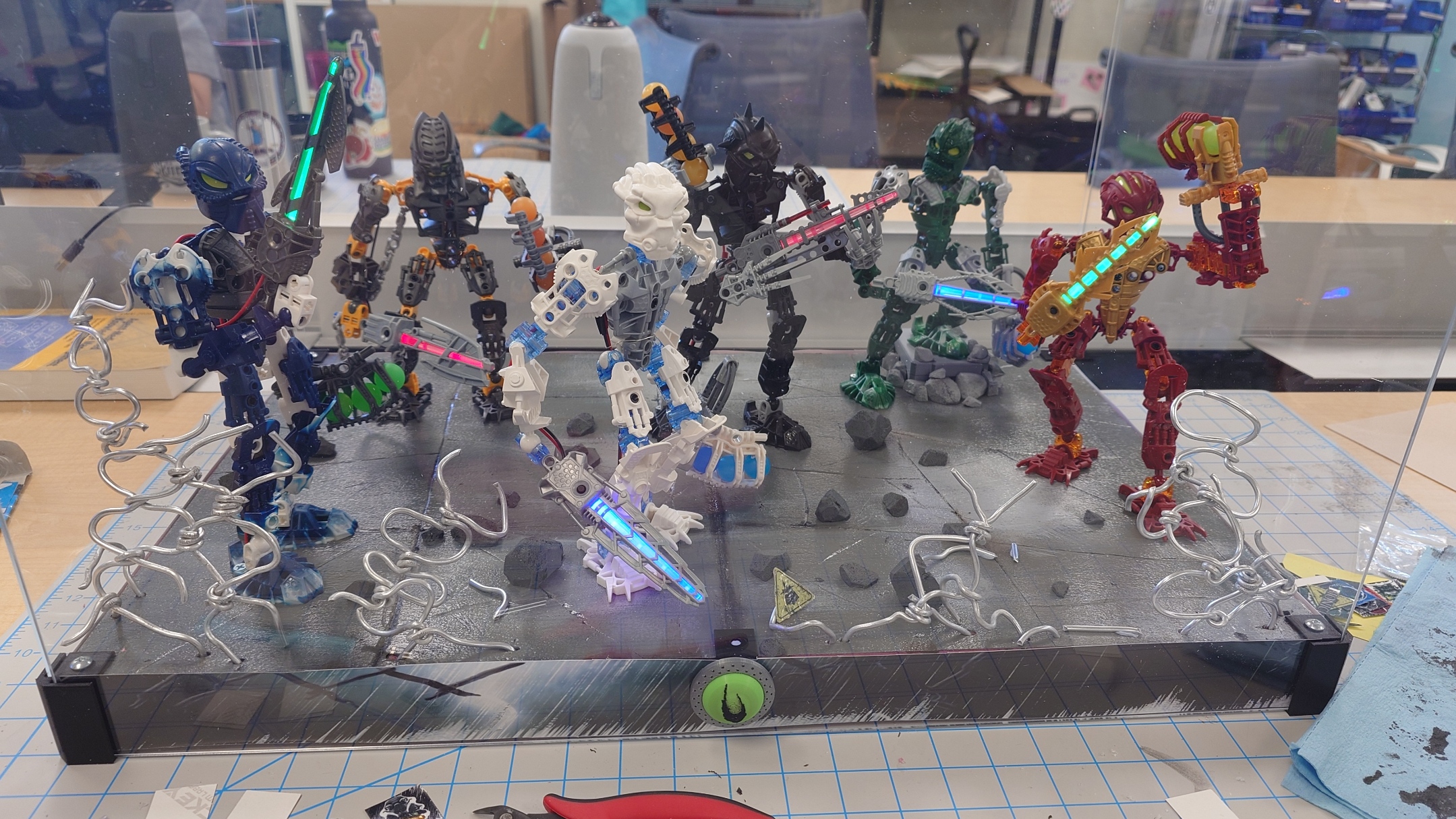
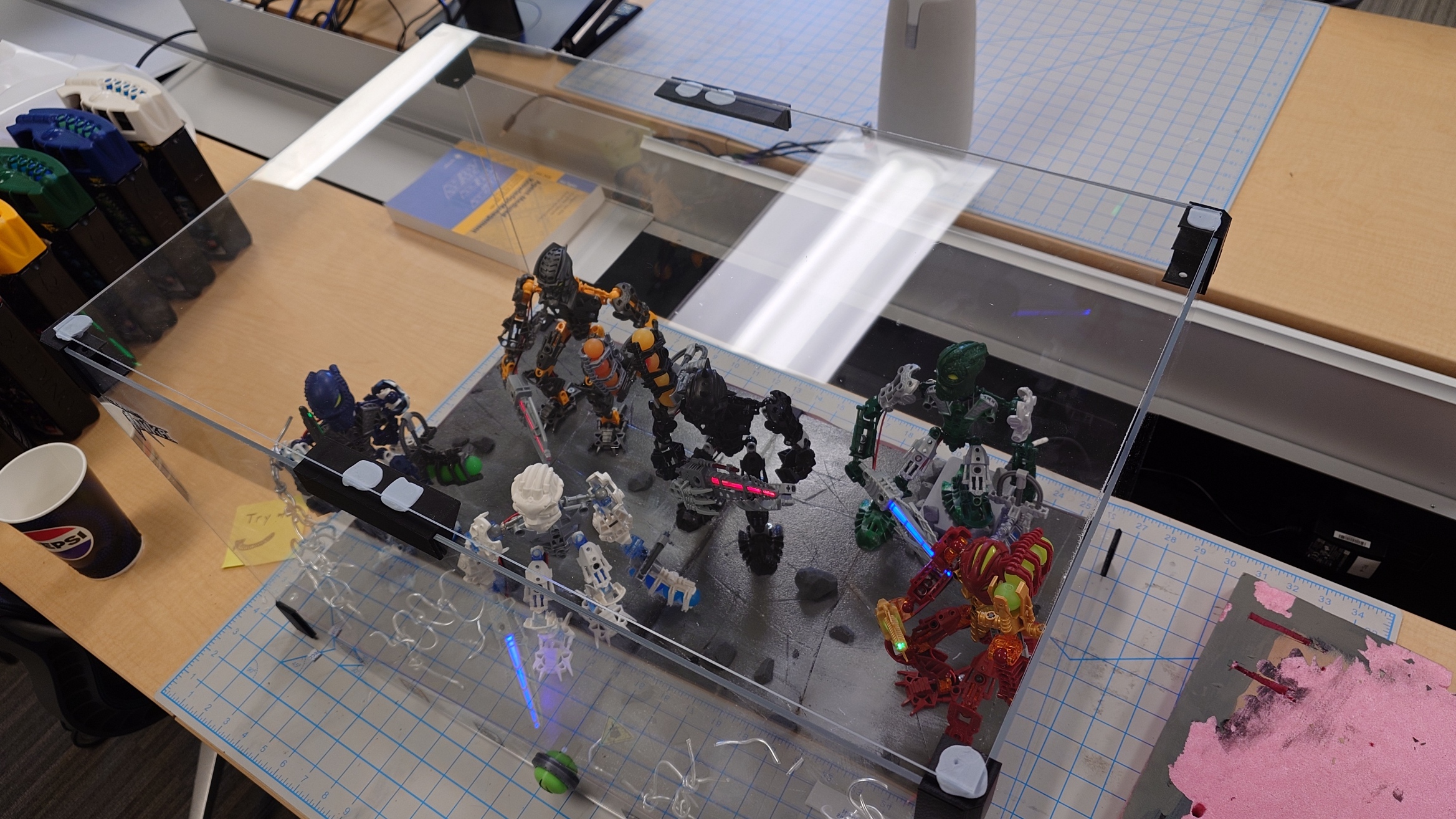
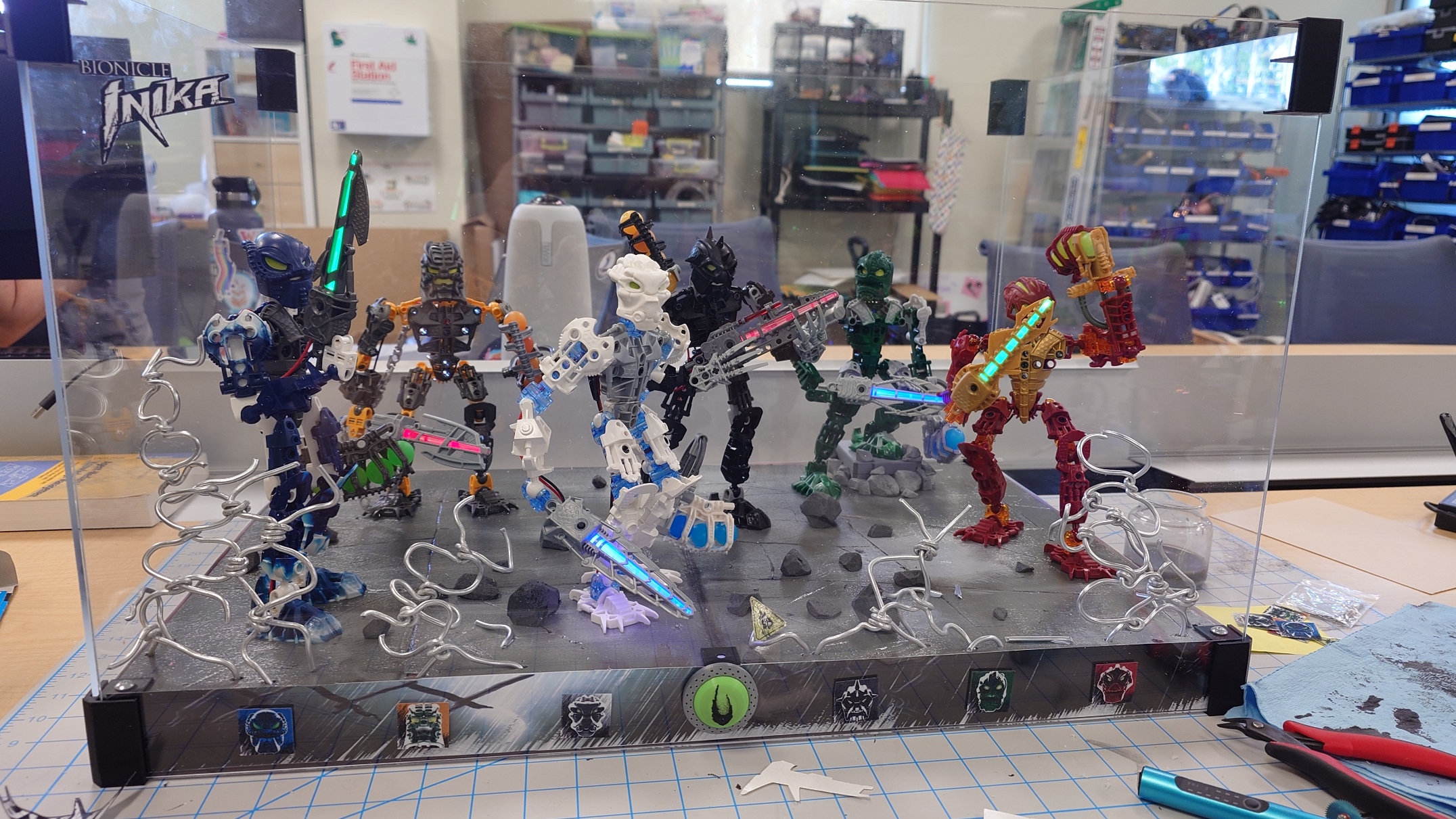
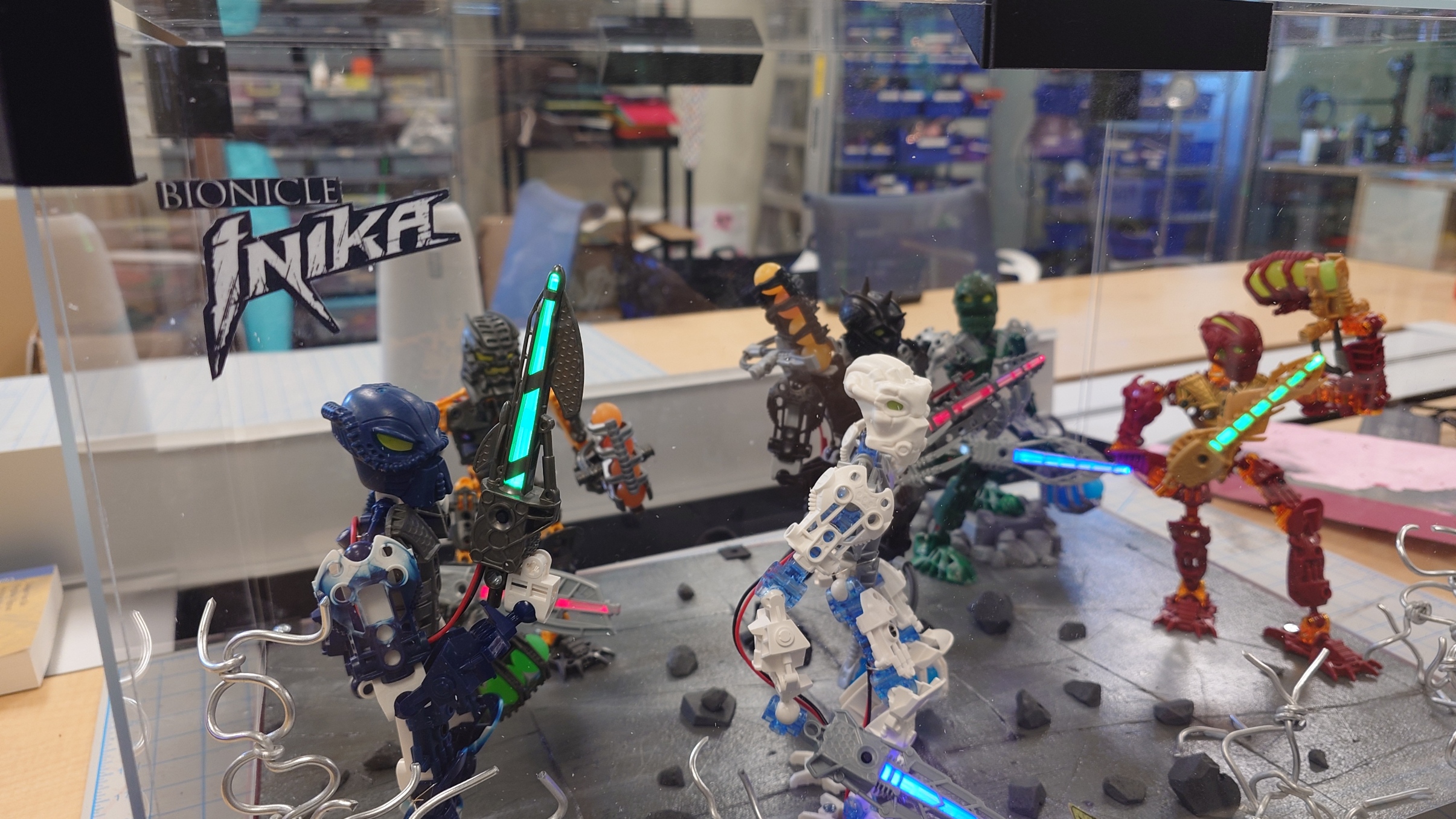
Angela: Welcome to the Digital Creator Podcast, the show where we spotlight students working on cool digital projects. I’m Angela, a consultant at the Digital Knowledge Center, where we empower students to be digital creators. Today’s guest, Hayden, designed and built an intricate display case for the 2006 Lego Bionicle line combining his passions for Bionicle, electronics, and 3D printing.
Hayden: My name is Hayden De La Chapa. I go by he/him. I am a cybersecurity major, and I anticipate to graduate in the summer of 2026.
Angela: So can you tell us a little bit about your project?
Hayden: So I’m doing a display for, like a display case, for this toy line that Lego made called Bionicle. Specifically, I’m doing the 2006 year Bionicle.
Angela: What got you interested in this type of project?
Hayden: So a couple of years ago, I saw some post on some social media site where people were creating their own displays for various years of the Bionicle franchise. And so that kind of got me into the idea of like trying to, of wanting to do one of these myself. It just so happened to work out that I had a full collection of the 2006 year that I really love. And we also had the DKC here who I could do a fellowship for to also take credit. So it was kind of a win-win-win all around.
Angela: Yeah, that’s awesome. So obviously you already had the 2006 Bionicle line. What got you interested in Bionicle in the first place?
Hayden: I think it’s just always been a part of my life. As far, like some of my earliest memories are my dad bringing home Bionicle from the store. And so I think it’s just between just always being a part of my life and also it being my like autistic fascination has been, it just stuck around for as long as it has.
Angela: Nice.
Hayden: With a very strong passion.
Angela: So then you reached out to the DKC for a fellowship. So how did you hear about the fellowship in the first place?
Hayden: I can’t remember the exact moment I like heard about it. I’ve just been in the DKC a lot for various projects, various hobby crafts and everything. And I’ve just spoken to Cartland and Shannon about it. And just I’ve heard them mentioned how they’re wanting more fellowships. And so kind of when I started really taking this idea seriously, that’s when I kind of went back to the DKC. I was like, okay, how do we, what is a fellowship? How does this work? And how do we do all this?
Angela: So at the beginning of, you know, talking to Cartland and Shannon, did you come up with like end goals for this project? And what were those goals?
Hayden: I suppose my end goals were just, you know, like I had a vision of what I wanted to do in mind for this display. I knew I wanted to make it look very like professionally done, very, very nice and very fancy, more than, more nice than I would typically do one of these on my own. And I suppose I also wanted to have a little bit of that like Lego store displays if you’ve ever seen those in Target and Walmart and all those stores.
Angela: So what sort of technology did you use to make this come true?
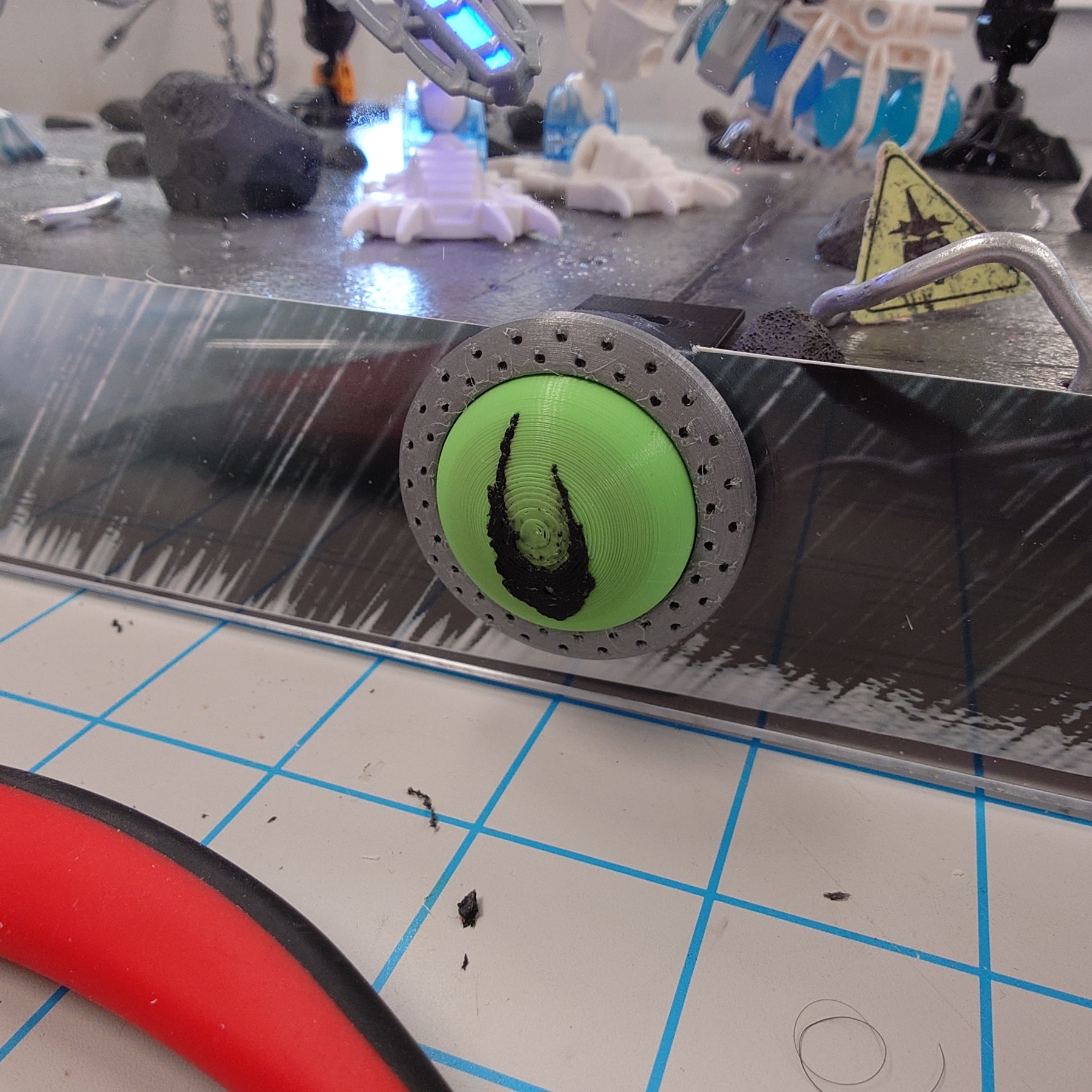
Hayden: I’ve used some like specific kind of foam for the base. I have plexiglass ready to set up for the actual case, the transparent part of the case. You know, I’ve done a lot of 3D printing for both, like some cable management and some like some platform razors and I’m currently working on a button right now. And of course, lots of lights and lots of wires and lots of other little electronic parts just all around the DKC and some paints and then like a software that I’m familiar with to create all these 3D models to print out.
Angela: What was the software?
Hayden: Blender.
Angela: Okay, cool.
Hayden: Yeah.
Angela: Wow, that sounds like a lot, a lot of like different moving parts to it.
Hayden: It was a lot more than I was anticipating.
Angela: Yeah, so I guess, how did you come up with the ideas for this project? Like, oh, I want this like specific lights, like this specific thing to print out. How did you come up with those ideas?
Hayden: Typically, I just, they just kind of like fall into place. So the Bionicle figures, you know, their whole gimmick was like, they came with these like special flashing light up swords that no other set had before or after. And so I’m like, oh, well, you know, I wanted to, I could either keep that flashing or I can make it like a custom one that keeps the flashing like, or it keeps the light permanently on. And so trying to figure out the, trying to figure out like that kind of pathway, like, okay, so I need this light, I need this, I need these cables for this light, I need to do this. It’s just kind of like a whole, like I guess, tree of ideas that come one after another to form one bigger idea, I suppose.
Angela: Gotcha. So, in creating this Bionicle display, did you face any specific challenges?
Hayden: Oh boy. Where to even begin with that? There’s so many, so many. Not necessarily any big, big challenges, maybe like a couple, but like I’ve had, it’s just been one like tiny little problem after another, like, oh, this cable is too small, or this LED can’t fit in here, or this LED can’t be combined with this LED or this much power, or now like I can’t use all, I have to make specific supports for this side of the board because it’s too thick on this side, it’s too thin on this side. I can’t use this bolt, I can’t use that bolt. It’s just, I think the biggest, to focus on like one specifically, I think the biggest one I’ve had is just, trying to figure out the wiring of the LED lights and trying to get those all hooked up. it’s, funnily enough, the thing I’m most confident in and the thing I’ve had the most training with in my previous hobbies and everything. But it’s just trying to get everything to look nice and trying to wire the or route the wires properly. And then you have to solder everything together and then create a circuit board for that and then plug that into another board. And then that gets the power and then, oh, oh, something broke. Now I got to do it again. I got to do it properly this time. And I only recently just got it stabilized, we’ll say. It’s, you know, still could break at any second, but I’m hoping it’ll stay okay.
Angela: Yeah, so like lots of little problems since there’s like so much going on. So when you face these problems, is there a specific way like you tackle them to try to solve the issue?
Hayden: I just keep trying ideas until, like I’ll try to find like tutorials online if I don’t have any ideas in my head currently. And if I can’t find anything online for it, then I’ll actually discuss with ChatGPT and I’ll tell it, hey, this is what I have for my project. This is what’s going on. This is the issue I’m facing. Do you have any ideas? And so typically, I don’t think I’ve had very great success with its solution specifically, but just talking with it, kind of helps me brainstorm and chug my brain a little bit. And that typically gets me to the solution I need.
Angela: That’s a really cool solution to finding the solutions. So you said like you had some experience with soldering and things like that. So with soldering, using the LED lights, using the 3D printer, had you done that sort of thing before this project or were those new things you had to learn?
Hayden: So the only new things I really learned out of everything I’ve listed is just like, I guess, painting. Like I haven’t really done like proper paintings since 5th grade. So, trying to do this, like the proper brush strokes and keeping all the layers thin, but thick enough and then the varnish. Other than that, I’m not really familiar with like 3D modeling in itself. Like I’ve done 3D art before and I’ve done commissions, but I haven’t modeled myself. So that’s also been something that’s been kind of uncomfortable to get around. But like soldering and 3D printing I’ve done before. Shannon actually was the one who taught me how to solder. And I’ve done 3D printing for pretty much as long as 3D printers have existed. I used to have one back in middle school, in my middle school’s library. And of course, dealing with the actual Bionicle themselves is an easy task.
Angela: Yeah. So when, so you learned how to solder like at the DKC though?
Hayden: Yes.
Angela: Okay, cool. That’s cool. How did you go about that?
Hayden: So I actually had another project that I was interested in. And I, somewhat recently, somewhat after getting into college, I found out I have a really like deep passion for repairing stuff. Specifically, like I’ve had a lot of, I’ve repaired a lot of like older game consoles like the PlayStation 2 or I’ve tried the Xbox 360. I haven’t done very well on that. But I acquired a Nintendo Virtual Boy, one of those really awkward consoles that failed miserably back in 19, whatever. And you know, I had an issue with one of its lenses and I had to try to fix that up. And so I brought it to Shannon and Cartland and I was like, hey, you know, I got this kind of issue. I don’t really know what’s going on here. I don’t know. I’ve heard about this thing called soldering. And Shannon was like, I can give you a quick lesson on soldering. We have the tools right here. I’m like, oh yeah, okay, sure. So I scheduled that. She gave me the rundown on how to solder and I’ve kind of, you know, picked up like the more intricate details ever since. But I have not finished that Virtual Boy project.
Angela: Wow. Well, that’s really cool that it led or helped you complete this project.
Hayden: Yeah.
Angela: That your skills from like earlier back at the DKC led to this. One thing I wanted to ask about was like painting. So you said that was something you had to learn more because it had been a while since like 5th grade. So how did you go about learning how to paint in the proper way for this display?
Hayden: For the most part, I just kind of did it by feel, I suppose. I just kind of like, you know, like the specific brush strokes and kind of doing the layers right, I just kind of did it how I assumed you should do it. And so far it looks like it’s been okay. But, again, with stuff like varnish and, how many layers of varnish should I apply, how many layers of paint should I apply, it was actually a combination between watching, just like some knowledge I’ve had beforehand by watching some specific YouTube channels that do similar kind of projects. And, you know, one I want to point out specifically is North of the Border on YouTube, absolutely fantastic. He’s also a huge inspiration and help as to a lot of the techniques and why I’m doing this project in the first place. Other than that, it’s also just, looking up online tutorials that I may not fully understand, but I get the general idea of.
Angela: Gotcha. All right, so we’re near the end of the semester. So I was wondering at what points are you at in your project right now and what are the next steps?
Hayden: So currently I’m very close to the end, I’m hoping, provided no major issues pop up all of a sudden. I’m putting the kind of decorating finishing touches on it right now. I just printed out some new supports that should be the proper size this time. I’m working on a custom button, so that way when I press the button, it’ll do, it’ll change the lights from being, you know, static, just, you know, always on to like a special flashing animation, exactly like the originals were. And after that, I’m going to work on getting just a few more decorations about. I need to glue some rocks onto the base. I need to create like a decal that’s going to wrap around the bottom of my base. And I’m still waiting to hear back on some group for the printer on that. And then after that, I just need to get the plexiglass in place and then I should be done. I’m sure I’ll do a few tiny little like adjustments and changes and additions here and there, but that’s the general goal I have going on now.
Angela: Gotcha. So it sounds like you have most of it done. It’s just like finishing touches type things or like little things.
Hayden: Yeah.
Angela: And so once you’re done with this, do you plan on displaying it anywhere or posting about it somewhere?
Hayden: Posting about it for sure on my personal Instagram. Displaying it with me forever for the rest of my life.
Angela: Gotcha. That’s awesome. And then what has been the most rewarding thing about doing this project? Or what do you think will be once you’re completed with it?
Hayden: I just like that I’m able to work with my Bionicle, my personal Bionicle, in a school setting for credits. I like having people walk in and see the project. I like getting to show it off. I like getting to tell people about it. Anything that relates to Bionicle and having other people know about it, I think that’s the most rewarding part to me.
Angela: Yeah. And then once this fellowship ends, you’ll have your display done. Do you think you’ll plan on continuing this project in a sort of sense, maybe making more displays or something along those lines?
Hayden: I actually have like recently considered it because I do, I’m in a little bit of a tricky credit situation. I need a lot more credits than I have classes for. So I was discussing that with Shannon, and I was, because there’s 10 years worth of Bionicle to do this with. And another 2006 line also has special lights that would also be a challenge. But the one thing I’m concerned about is just that I’m not sure it’ll be much of a challenge, as much as it’ll be just a kind of like, okay, here’s what we got to do. Let’s just get it done already. You know, I mean, I would also learn some stuff, especially because the other figures are, you know, they have their own, like I said, they have their own challenges between their lights and the way they’re like modeled and everything. I would like to. I might, I might, I might at least apply for it. No clue if I’ll actually, no clue if it will happen.
Angela: Gotcha. So maybe another potential fellowship. If not though, will you still like maybe do something like this, not doing the fellowship or I don’t know.
Hayden: Maybe. Just kind of, you know, again, my kind of, where I’m at in life is very, I guess I’m very nomadic at the moment, so it’s hard to kind of want to invest in any like special tools or special gear or everything or, making another big display that I got to carry around with me wherever I go, whether it’s, back to Texas or out of the country or wherever.
Angela: That makes sense. So I know, like you’ve talked about making this project. I was wondering if doing this project has related to your schoolwork or has made you a better student in a sense?
Hayden: Not really, honestly. I’ve already kind of, it’s kind of just building on my hands-on skills which I’d like to use more in the future for a career.
Angela: Okay, gotcha. So this doesn’t really relate, but still, it’s like a hobby, so it’s fun. And then my final question, would you recommend that students do a fellowship and why?
Hayden: I mean, yeah, if you have any sort of idea you want to do for, like, I mean, either a fellowship or a workshop, if you just, if you got something you just want to, like, do real quick, you can do a workshop. If you had a longer idea that maybe takes some more time and dedication to complete, definitely do a fellowship. Because beyond the fact that you can either get paid for it or get credits upwards of six, I’m currently doing mine for three credits and you can go as low as one. So beyond those rewards, you still, you get to keep whatever you get, whatever you create from the fellowship. You don’t have to pay for anything yourself for the most part, unless there’s like something way out of budget. But for the most part, you know, materials are all covered by Cartland and Shannon. So, you know, free stuff’s always good and you’re coming out with some free stuff and it’s your own like handiwork. It’s something you can like say, I made, I’m proud of this. You can have a situation like me where it’s just something you’re very deeply passionate about and you get to write a 16-week blog post about it and about how much you’re doing and how much you love this series and how much you love this thing that you’re doing. And then you get to show it off to people. So really, if you have an idea and you want to put some time aside for it, I see no reason not to go try for a fellowship.
(Outro music comes in and fades out)
Angela: This has been the Digital Creator Podcast. You can find a transcript of our conversation and more about this project below. This podcast was produced by me, Angela Payne, with help from the resources at the Digital Knowledge Center. Are you interested in becoming a digital creator? Do you have a cool project you want to share? Go to dkc.umw.edu for information on how to get started. Thank you for listening!
(Outro music fades back in)
For information on how to apply for a fellowship visit the DKC site.
Reply